
Kundan Jewelry: Origin and Why It Still Works Today
Kundan jewelry has a way of making even a simple outfit look occasion-ready. A pair of chandbali earrings with a plain kurta, a small pendant with a saree, or a statement ring with a black dress can completely change the mood of an outfit.
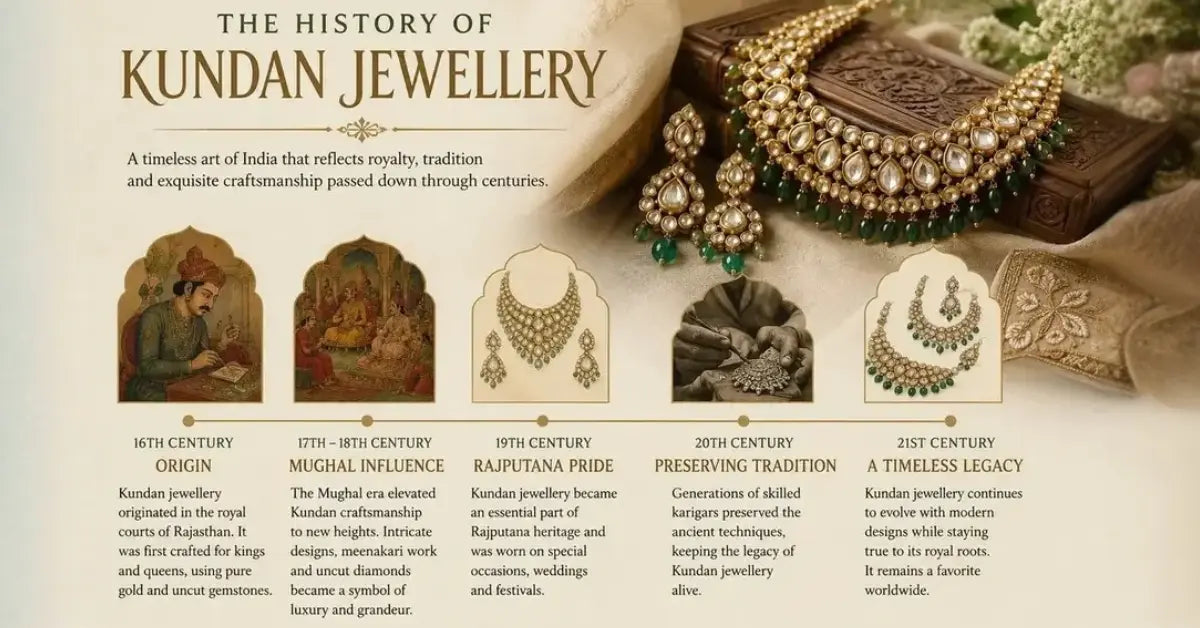
But Kundan was not always designed for everyday wear. Its earliest forms were made for royal courts, weddings, and grand ceremonies. The pieces were often elaborate, heavy, and meant to be seen from a distance.
Today, Kundan has changed. You can find it in light earrings, slim pendants, pastel chokers, adjustable rings, and simple bridal sets. That shift is why it remains popular—not only in India, but also among NRIs in Europe who want Indian jewelry that fits real life.
This article looks at where Kundan jewelry came from, how the craft developed, and why it has become such a strong part of modern fashion jewelry.
What Makes Kundan Jewelry Different?
Kundan jewelry is not simply “Indian jewelry with stones.” The word refers to a particular way of setting stones.
In traditional Kundan work, an artisan places a gemstone, glass stone, or crystal into a metal frame and secures it using layers of highly refined gold foil. The foil is pressed and burnished around the stone until it holds firmly in place.
Because pure gold is soft, it can bond to itself under pressure. That is what allows the setting to look smooth and seamless. There are no obvious claws or prongs holding the stone, which gives Kundan its distinctive flat, polished look.
The Meaning Behind the Name
The word Kundan means highly refined gold. In jewelry-making, it refers both to the gold foil used in the setting and to the finished style created through that process.
This is why many people associate Kundan with a rich, regal appearance. The technique was originally labour-intensive and required considerable skill, especially when working with delicate stones and detailed designs.
How a Kundan Piece Is Made
A Kundan artisan begins with a metal framework. The stone is placed into that framework, then layers of refined gold foil are added around it.
The foil is carefully pressed and shaped so that it grips the stone. The process takes time because each stone needs to sit securely without damaging its surface.
Many traditional pieces also include Meenakari enamel on the reverse side. This colourful enamel work adds beauty and helps protect the back of the jewelry. A Kundan necklace with Meenakari on the reverse can look just as interesting from behind as it does from the front.
Kundan, Polki, and Jadau Are Not the Same
These three words are often used together, but they do not mean the same thing.
Kundan describes the stone-setting technique.
Polki refers to uncut or minimally cut diamonds.
Jadau is a broader Rajasthani jewelry-making tradition that may include Kundan setting and Meenakari enamel.
So, a piece can be Kundan without being Polki. It can also be part of Jadau work without containing Polki diamonds.

The Royal Beginning of Kundan Jewelry
Kundan jewelry developed in the royal courts of Rajasthan and Gujarat. These regions had strong traditions of metalwork, gemstones, enamel, and ornamental craftsmanship.
Royal families used jewelry not only as decoration but also as a sign of status, wealth, and cultural identity. Large necklaces, layered sets, forehead ornaments, earrings, and ceremonial pieces became part of that visual language.
The Mughal Influence
The Mughal period brought new artistic influences to India. Persian and Central Asian design traditions blended with existing Indian craftsmanship, resulting in richer colours, finer detailing, and more elaborate jewelry forms.
Kundan work flourished during this period. It became closely associated with royal courts, weddings, and important celebrations.
Why Jaipur Became Important
Jaipur became one of the best-known centres for Kundan and Meenakari work. Artisans there developed expertise in stone setting, gold foil work, enamel colouring, and fine hand-finishing.
Even now, Jaipur is strongly connected with traditional Kundan jewelry. Many modern designs still take inspiration from the city’s craft heritage.
Meenakari Made the Back Beautiful Too
One of the most beautiful features of traditional Kundan jewelry is Meenakari enamel on the reverse side. This colourful work was not only decorative. It also helped protect the back of the piece.
The result was jewelry that looked considered from every angle. A bride could wear a Kundan necklace knowing that the reverse side was just as carefully finished as the front.
How Kundan Became Modern Fashion Jewelry
For many years, Kundan was associated with heavy bridal sets and ceremonial occasions. That association still exists, but it no longer tells the whole story.
Modern designers began making smaller, lighter, and more versatile pieces. The goal was not to replace traditional bridal Kundan, but to make the style easier to wear beyond weddings.
Artificial Kundan Made the Style Accessible
Artificial Kundan jewelry usually uses a metal base, such as brass or alloy, with gold polish or plating. Instead of precious gemstones, it may use imitation stones, glass stones, pearls, or crystals.
This does not make it less beautiful. It simply makes it more accessible.
For someone buying jewelry for Diwali, a wedding, a party, or a family function, artificial Kundan can be a practical choice. You get the festive look without the cost or responsibility of solid gold.
Lightweight Designs Became Important
Comfort matters. A bride may love a grand necklace in photographs, but wearing it for several hours can become tiring.
That is why lightweight Kundan designs have become popular. Smaller chokers, delicate pendants, slim earrings, and adjustable rings allow women to enjoy the traditional look without feeling weighed down.
Pastel Colours Changed the Look
Traditional Kundan often used deep reds, greens, and gold. Those colours are still popular, especially for weddings and festive occasions.
But modern Kundan also appears in softer shades: blush pink, mint, powder blue, lavender, and ivory. These colours work well with pastel lehengas, floral sarees, and Indo-Western outfits.
They also make Kundan feel less formal and more wearable for daytime events.
Kundan as Statement Jewelry Today
Kundan works best when it has room to stand out. You do not need to wear a full set to create a strong look.
Sometimes one piece is enough.
Statement Earrings
Chandbalis, jhumkas, floral studs, and pearl-drop earrings can transform a plain outfit. A simple kurta set, silk shirt, or solid-colour saree can look festive with the right pair of earrings.
If your outfit already has heavy embroidery, choose smaller earrings. If the outfit is simple, let the earrings do the work.
Layered Necklaces
A short Kundan choker paired with a longer pendant creates depth without looking overly traditional. This style works well with V-neck blouses, simple sarees, and solid-colour lehengas.
Avoid adding too many other necklaces if the Kundan piece is already detailed.
Rings and Bracelets
A Kundan ring or bracelet is an easy way to add an Indian touch to a modern outfit. These pieces work especially well for NRIs who want jewelry that can move between Indian and Western wardrobes.
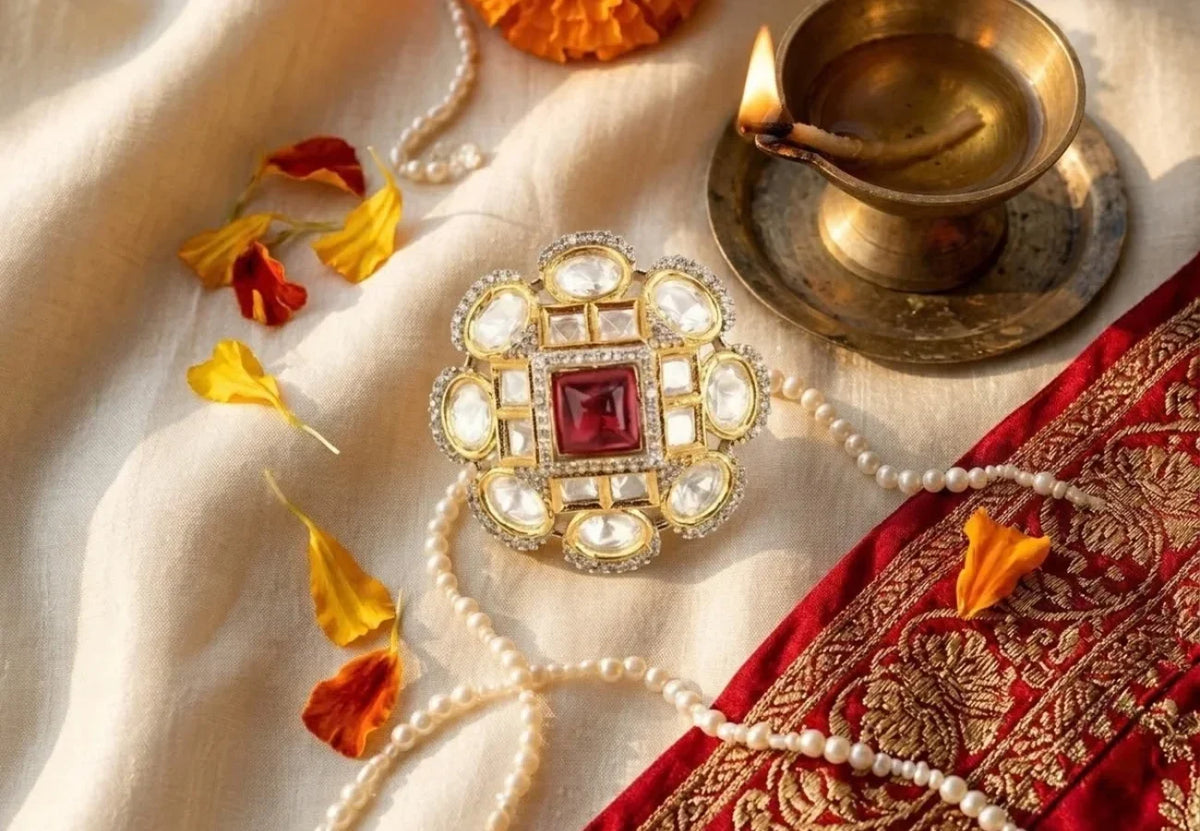
A single adjustable ring can look just as intentional as a full jewelry set.
Minimal Kundan for Daily Wear
Small studs, thin pendants, delicate bangles, and simple rings make Kundan suitable for more than weddings. They can work for office wear, casual dinners, cultural events, and small family gatherings.
The key is scale. A small Kundan pendant feels effortless; a full bridal choker set may feel too formal for a normal day.
How to Wear Kundan With Different Outfits
With Sarees
Kundan pairs naturally with silk, georgette, organza, and Banarasi sarees. For a traditional look, choose a necklace set with matching earrings.
If the saree is heavily embroidered, keep the jewelry simple. A pair of earrings or a small pendant may be enough.
With Lehengas
With a lehenga, balance matters more than matching every detail. If the blouse and dupatta are heavily embroidered, skip the necklace and wear statement earrings instead.
If the outfit is simple, a Kundan choker or short necklace can become the focal point.
With Indo-Western Outfits
Indo-Western outfits give you more freedom. Try a Kundan pendant with a kurta and wide-leg trousers, or wear statement earrings with a long jacket and a simple dress.
The idea is to mix traditional craftsmanship with a modern silhouette.
With Western Outfits
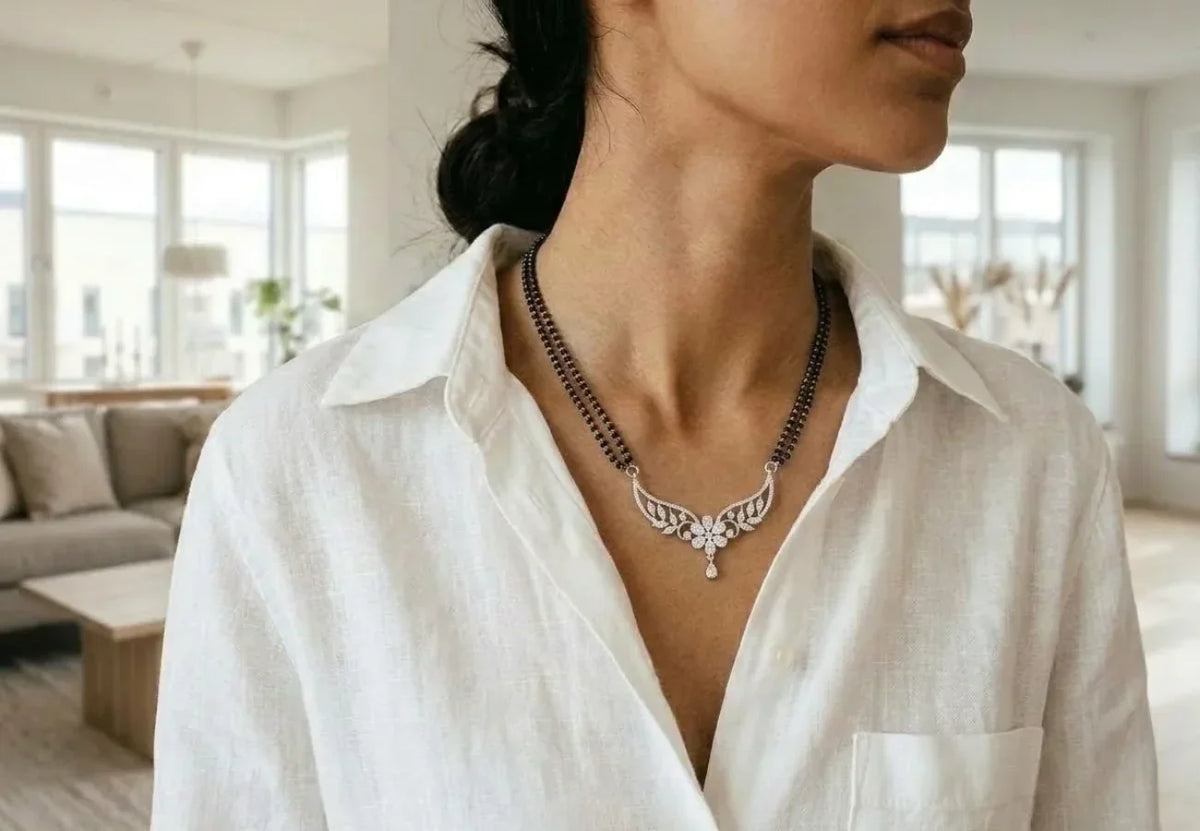
Kundan can work with Western clothes too. A plain black dress, white shirt, or neutral blazer can look festive with Kundan earrings, a statement ring, or a layered necklace.
Choose one strong piece rather than wearing a complete traditional set.
Why NRIs in Europe Like Kundan
For NRIs, Kundan jewelry often solves a practical problem. You may want something Indian for Diwali, a wedding, or a family celebration, but you may not want to invest in heavy gold or order jewelry from India every time.
Artificial Kundan jewelry gives you options. It is lighter, usually more affordable, and available in designs that work with both Indian and Western outfits.
A Kundan necklace set can be worn for Diwali, then styled again for a wedding or cultural event. A pair of earrings can work with a saree one day and a simple dress the next.
What to Check Before Buying Kundan Jewelry Online
Before ordering, look beyond the product photo.
Check the base material, plating details, stone type, weight, closure, and return policy. If you are buying earrings, look at the weight per pair. If you are buying a necklace, check whether the chain is adjustable.
For NRIs in Europe, delivery time and return options matter too. A Copenhagen-based store with EU delivery can be more convenient than ordering from India and waiting for international shipping.
FAQs About Kundan Jewelry
Where did Kundan jewelry originate?
Kundan jewelry developed in the royal courts of Rajasthan and Gujarat. It became more widely known during the Mughal period, when Indian craftsmanship blended with Persian and Central Asian artistic influences.
Is Kundan jewelry always made with real gold?
No. Traditional Kundan work may use refined gold foil, but many modern pieces use brass or alloy bases with gold polish or plating. These artificial pieces offer a similar look at a lower price.
Is Kundan the same as Polki?
No. Kundan is a setting technique. Polki refers to uncut or minimally cut diamonds. A Kundan piece may use glass stones, crystals, gems, or Polki diamonds.
What is Jadau jewelry?
Jadau is a broader Rajasthani jewelry-making tradition. It often includes Kundan setting and Meenakari enamel work, but the terms are not interchangeable.
Can I wear Kundan jewelry every day?
Yes, if the piece is lightweight and well made. Small studs, thin pendants, and simple rings are easier for daily wear than heavy chokers or large bridal sets.
How do I care for artificial Kundan jewelry?
Keep it away from water, perfume, and harsh chemicals. Wipe it gently after wearing and store it separately to prevent scratches and tangling.
Can Kundan jewelry be worn with Western clothes?
Yes. Kundan earrings, rings, pendants, and layered necklaces can work well with dresses, shirts, blazers, and jumpsuits. Use one statement piece rather than a full set.
Is Kundan jewelry suitable for brides?
Yes. Kundan remains a popular choice for Indian brides because of its traditional look and detailed craftsmanship. Modern brides can choose lighter sets, statement earrings, or minimal chokers for comfort.
A Craft That Keeps Changing
Kundan jewelry has moved a long way from royal courts and ceremonial wardrobes. It still carries the richness of Indian craftsmanship, but it no longer belongs only to weddings or special occasions.
A pair of Kundan earrings can make a plain outfit feel festive. A small pendant can add an Indian touch to a Western outfit. A lightweight choker can work for Diwali, a wedding, or a family dinner.
That flexibility is why Kundan remains relevant. It is not just a piece of heritage; it is jewelry that can adapt to the way people actually dress today.
Explore IndianGehne’s Kundan Jewelry collection for Kundan necklace sets, earrings, rings, and festive Indian jewelry with delivery across Europe.
Shop our other collections
Bridal | Earrings | Rings | Tikka | Cultural
Updated on 31-10-2026
Comments