
Bridal Jewelry for Mehndi, Sangeet, the Wedding and Reception
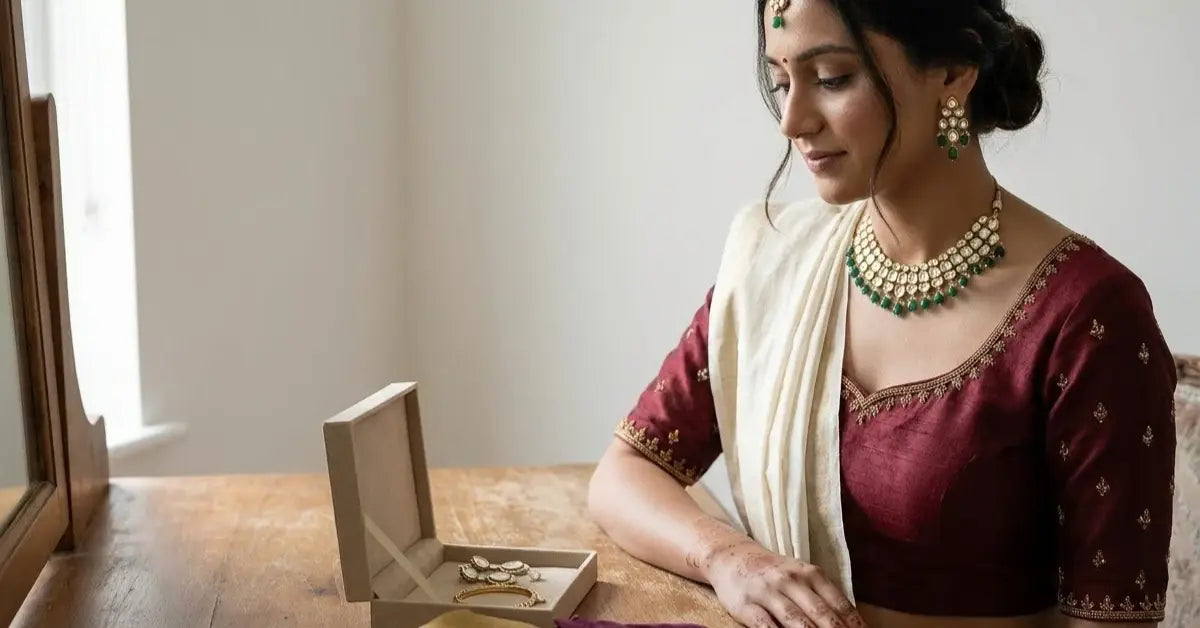
Choosing bridal jewelry for wedding functions is easier when you stop treating every event as a smaller version of the wedding day. Mehndi means keeping your hands accessible. Sangeet means moving comfortably. The ceremony brings together your outfit, family traditions and personal choices. At the reception, you may want a completely different silhouette.
That does not mean buying four complete jewelry sets.
A more useful starting point is to decide which piece will lead each look: colorful earrings for Mehndi, a choker for Sangeet, a coordinated bridal set for the ceremony, perhaps a statement necklace for the reception. You can then reuse smaller accessories without making every outfit feel the same.
This guide explains how to plan those choices, what to check before ordering and where you can simplify.
Plan Your Bridal Jewelry Around Your Outfits and Schedule
Before choosing individual pieces, write down what you are wearing for each function. Include the blouse neckline, sleeve length, dupatta placement,and hairstyle—not just the outfit’s color.
A necklace that looks balanced with an open neckline may sit awkwardly against a heavily embroidered collar. Long earrings might be lovely with an updo but catch repeatedly in loose curls. These are easier problems to solve during a trial than while everyone is waiting for you to leave.
Bridal styling guidance also recommends considering the outfit first, along with the venue, timing and opportunities to wear the jewelry again.
Try Everything Together
Wear the blouse, necklace and earrings at the same time. Add the headpiece and dupatta if you plan to use them.
Take a photograph from the front and side. Then sit, turn your head and raise your arms. Notice whether anything shifts, pinches or catches. A piece does not need to be particularly heavy to become irritating if its edge rubs against your neck or its fastening sits badly.
Mehndi Jewelry for the Bride: Keep Your Hands Free
The most useful question for Mehndi is not “What looks most bridal?” It is “Where will the henna be applied?”
If the design extends over your wrists and forearms, bracelets, bangles, and hand chains can get in the way. In Vogue India’s bridal jewelry guide, designer Sunita Shekhawat recommends moving the focus away from hand accessories during Mehndi and considering head ornaments instead.

Put Color Near Your Face
Colorful earrings can give a simple Mehndi outfit enough detail without adding several accessories. Try pink accents with an ivory suit, green details with a yellow outfit, or pearl-detail earrings with a printed lehenga.
You do not have to match every color. Picking up one shade from the embroidery often looks more considered than trying to reproduce the entire outfit in your jewelry.
Indian Gehne’s jhumka collection includes pink, red, mint-green, and other colored designs, while its tikka sets offer additional color combinations for coordinated looks.
Choose a Headpiece if You Want More Detail
A maang tikka or matha patti can make the look feel complete while leaving your arms clear. Arrange it with your hairstylist during the trial so you know how it will be secured.
Floral jewelry is another option if you like a softer look. Ask the maker how to store it and how long before the function it should arrive; fresh and artificial floral accessories need different handling.
Save Hand Accessories for Later
If you want photographs with rings, bangles, or a haath phool—a hand ornament connecting the wrist and fingers—put them on only when the henna process and aftercare allow.
There is no need to wear everything throughout the appointment simply because it belongs to the outfit.
Sangeet Jewelry for the Bride: Test It While Moving
Sangeet jewelry needs to look right when you are dancing, not just when you are standing still.
Comfort and movement are central considerations in function-specific bridal styling. Statement earrings and bangles can work well, but the right choice depends on how they sit and move on you.
Choose Between Statement Earrings and a Detailed Necklace
With an embroidered or high-neck blouse, try earrings first. Chandbalis, jhumkas, or drop earrings may give you the detail you want without another layer around the neck.
With a simpler neckline, start with a bridal choker set. Add the earrings, then decide whether you need anything else.
You can wear a necklace and substantial earrings together. Just assess them as a combination rather than assuming a matching set will automatically feel comfortable.
Rehearse in the Actual Earrings
Wear your chosen pair during a short rehearsal. Turn, bend, and move your shoulders as you would during the performance.
Check whether:
- The earrings pull uncomfortably on your ears.
- Your hair catches in the setting.
- Drops or chains strike your neck.
- The backs remain secure.
- The necklace turns or shifts with movement.
There is no universal “comfortable” earring weight. Size, balance, construction, and your own tolerance all matter.

Keep a Smaller Pair Ready
Pack a second pair of earrings for later in the evening. You may want the statement pair for the entrance and photographs, then prefer something smaller for dinner.
It is a simple option to arrange before the day becomes busy.
Wedding Ceremony Jewelry: Build Around What Matters to You
The ceremony look may include family jewelry, regional ornaments or pieces associated with your marriage customs. Start with those before adding new purchases.
There is no single complete Indian bridal jewelry checklist that applies to every bride. Bridal collections span necklaces, earrings, head ornaments, wristwear and other accessories, but the final combination depends on the ceremony and the person wearing it.
Choose the Main Bridal Set First
Put on your main necklace and earrings before adding smaller accessories. Look at the space around your neckline, the width of the necklace and where its lowest point sits.
For an example of coordinated options, explore Indian Gehne’s bridal jewelry collection. The range includes Kundan-look sets, white-stone and pearl-detail designs, and gold-polish styles. Check each listing for the exact pieces and materials included rather than assuming every set contains the same accessories.

Layer a Choker and Long Necklace With Enough Space
If you want two necklaces, try them together with your blouse. Their lengths need to work as a pair.
Look for a visible gap so the designs remain distinct. Check that a pendant does not cover the main detail of the choker or catch against its lower edge.
A single statement necklace is also a complete choice. Vogue’s bridal guide includes expert advice favouring one strong necklace rather than automatically adding multiple layers.
Fit the Maang Tikka Around the Hairstyle and Dupatta
Head jewelry needs to be planned with the hair, not added as an afterthought.
Bring your maang tikka or matha patti to the hair trial. Check its position with the dupatta in place and confirm that it stays comfortable when you lower your head.
Indian Gehne’s tikka range includes several finishes and colored-stone designs, allowing you to coordinate a headpiece without necessarily buying another full set.
Try Bangles With the Finished Sleeves
Check how bangles sit against cuffs, embroidery and any hand ornaments. Make sure you can bend your wrist, hold items and manage your outfit.
If you are including family pieces, compare the actual finishes in daylight. Two pieces described as “gold-tone” may look quite different next to each other.
Reception Jewelry for the Bride: Start With the New Neckline
A reception outfit often changes the shape of the bridal look. That gives you room to change the jewelry too, even if you reuse some pieces.
Reception styling can include colored accents, statement necklaces or a choker, depending on the outfit and setting. There is no requirement to wear diamonds or buy a separate precious-jewelry suite.

Let the Outfit Decide the Focal Point
With a high or detailed neckline, try earrings without a necklace. With an open neckline, compare a short necklace with a longer design.
For an off-shoulder gown or blouse, look at the full outline in a mirror. A close-fitting necklace may create the shape you want; alternatively, earrings alone may leave the neckline cleaner.
These are visual decisions. The most expensive or elaborate option is not automatically the best fit.
Consider White-Stone or Pearl-Detail Designs
White-stone and pearl-detail jewelry can offer a different look from the warm gold-tone pieces you may have worn for the ceremony.
Indian Gehne’s bridal category includes white-stone and pearl-detail sets. When comparing them, read the material description: a white stone should not be assumed to be a diamond, and a pearl-style bead should not be assumed to be a natural pearl.
Reuse One Piece, Then Change the Balance
You might wear the wedding earrings again but remove the layered necklaces. Or keep a necklace and change to smaller earrings.
Try this before buying another set. A different hairstyle, neckline and accessory balance can make familiar jewelry look quite different.
How to Choose Artificial Bridal Jewelry Online
Artificial bridal jewelry can be a practical way to create several wedding looks. The important part is understanding what you are buying—not judging quality from a polished photograph alone.
Read Materials Separately From Style Names
Names such as Kundan-look, Polki-style, gold polish and pearl detail describe different aspects of a product. They do not, by themselves, confirm precious-metal content, natural diamonds or genuine pearls.
Check the stated base metal, finish, stone or bead material and any care instructions. Ask the seller when a detail is missing, particularly if you have a known metal sensitivity.
Check What the Bridal Set Includes
Look for an itemised description:
- Necklace or necklaces
- Pair of earrings
- Maang tikka or other head ornament
- Any additional accessories
- Fastenings and adjustment options
Do not rely only on the styled photograph. Pieces shown together may be sold separately.
Ask for Measurements and an Unfiltered View
Useful details include necklace length, earring drop, approximate weight and close-ups of the back and fastening.
If the color is important, request a photograph or video in ordinary daylight. Screen settings and lighting can change how gold-tone finishes and colored stones appear.
Buying Indian Bridal Jewelry in Europe
For brides shopping from Denmark or elsewhere in Europe, the order needs to arrive early enough for a trial—not simply before the ceremony.
Compare the seller’s dispatch location, estimated delivery, return conditions and process for reporting missing or damaged items. Confirm those details for your destination rather than assuming the same terms apply everywhere.
Before ordering, use a short checklist:
- Have the outfit and blouse neckline been finalised?
- Are the materials and included pieces clearly described?
- Have the dimensions been checked?
- Is there time to try the set with the outfit?
- Are the delivery and return conditions suitable?
Once those questions are answered, you can compare Indian Gehne’s bridal sets by design and included accessories rather than choosing only from the main photograph.
Pack Your Jewelry by Function
Put the pieces for each event in a separate labelled pouch or compartment. Add a quick photograph of the intended combination if someone else will help you get ready.
Keep necklaces apart to reduce tangling, protect delicate drops from pressure and store earrings as pairs. Follow the seller’s care instructions; do not assume every plated, glued, enamelled or stone-set piece can be washed in the same way.
Before packing, check the clasps and count the components. Discovering a missing earring back at home is much easier to manage than discovering it at the venue.
Frequently Asked Questions About Bridal Jewelry
Q.Do I Need a Different Jewelry Set for Every Wedding Function?
No. You can repeat earrings, rings, bangles or a necklace while changing the rest of the combination. Plan the ceremony look first, then see which pieces suit the other outfits.
Q.What Jewelry Should a Bride Wear for Mehndi?
Earrings and head ornaments are useful starting points because they leave the hands accessible. If henna will cover your wrists or forearms, discuss bangles and hand accessories with the artist before wearing them.
Q.How Do I Choose Comfortable Sangeet Earrings?
Try the actual earrings while dancing. Check the backs, how the weight feels and whether the design catches in your hair or touches your neck repeatedly. Keep a smaller pair ready if you want to change later.
Q.Should Bridal Jewelry Match the Lehenga Exactly?
It does not have to. You can repeat one color from the embroidery, choose a contrasting accent or keep the stones neutral. Compare the pieces against the finished outfit rather than a fabric photograph alone.
Q.Can I Wear a Choker and Long Necklace Together?
Yes, if their lengths and shapes work together. Try both with your blouse and leave enough separation for each design to remain visible. One well-proportioned necklace is an equally valid choice.
Q.Is Artificial Bridal Jewelry Suitable for the Wedding Ceremony?
It can be, depending on your preferences and any family or ceremonial requirements. Choose clearly described materials, suitable fittings and pieces you have tried with the outfit. Do not assume imitation styles contain the precious materials they resemble.
Make Each Bridal Look Work for the Occasion
You do not need four equally elaborate looks. You need jewelry that makes sense for what you will be doing.
Keep your hands accessible for Mehndi. Test your Sangeet pieces while moving. Build the wedding look around the ornaments that matter to you. For the reception, take a fresh look at the neckline before adding another necklace.
The final test is straightforward: put everything on together. If you can move comfortably, see the individual details and recognise your own style in the mirror, the combination is doing its job.
Our other Collection
Necklaces| Earrings| Rings | Tikka | Cultural
Updated on 16-11-2026
Comments